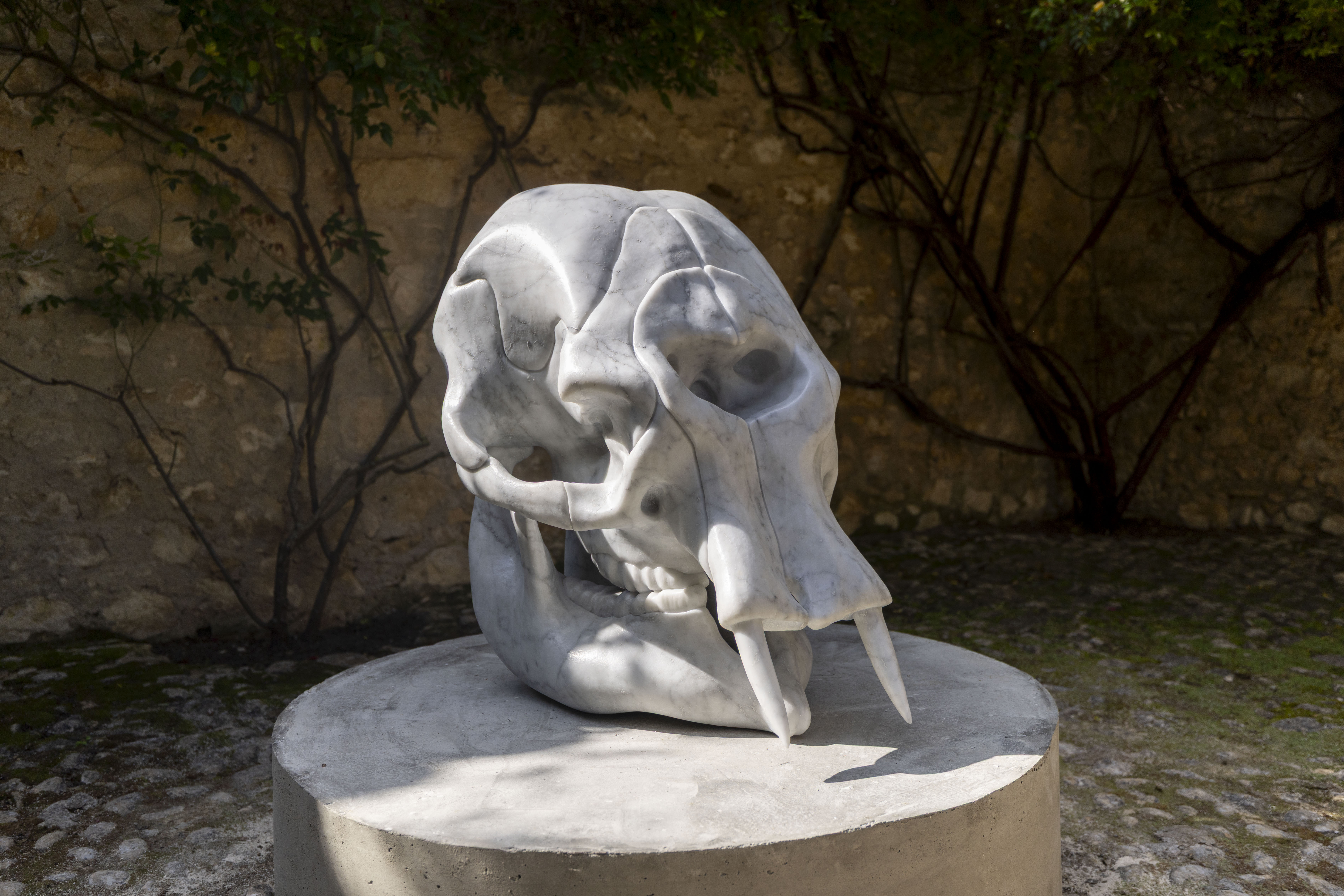
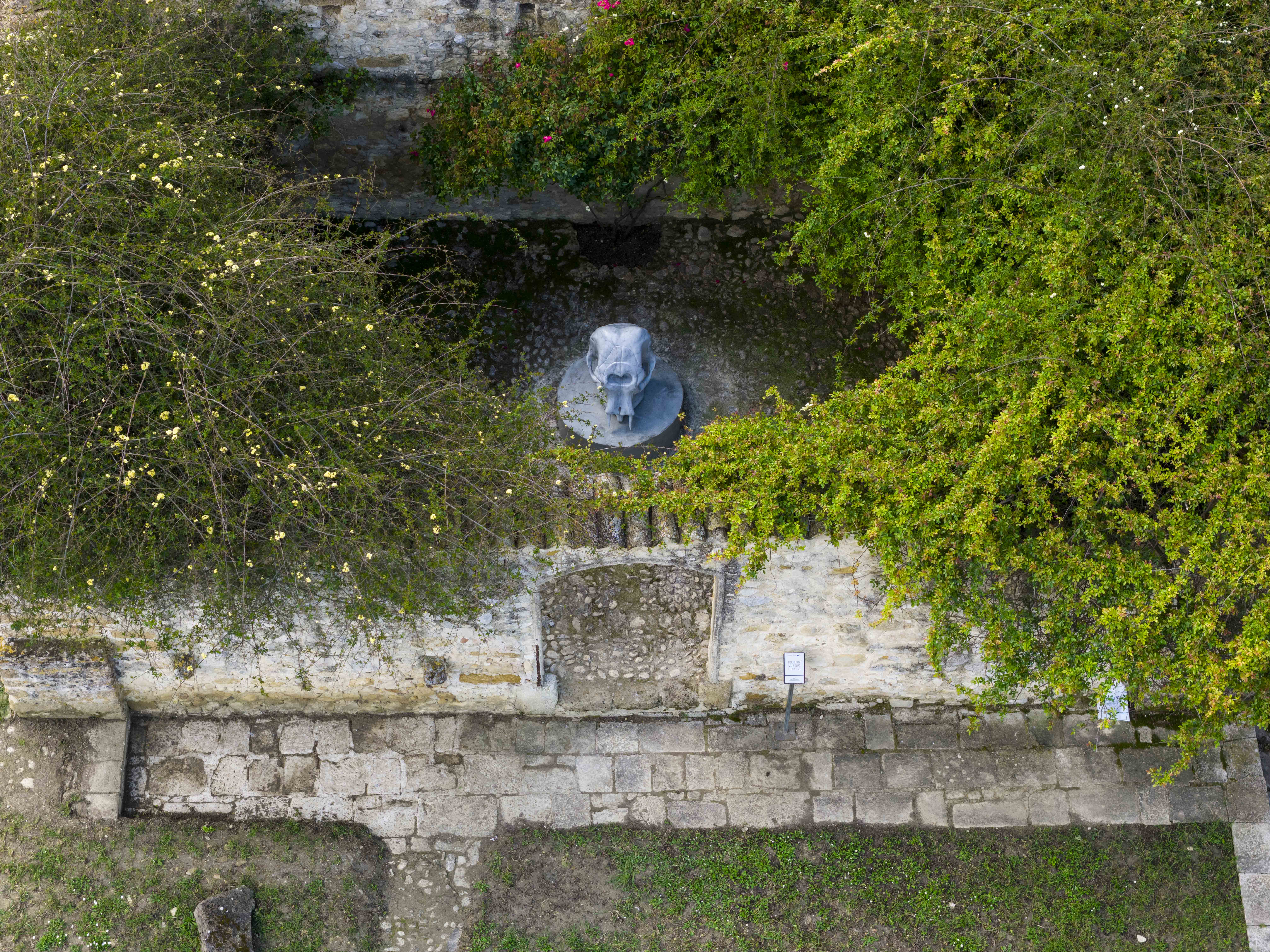
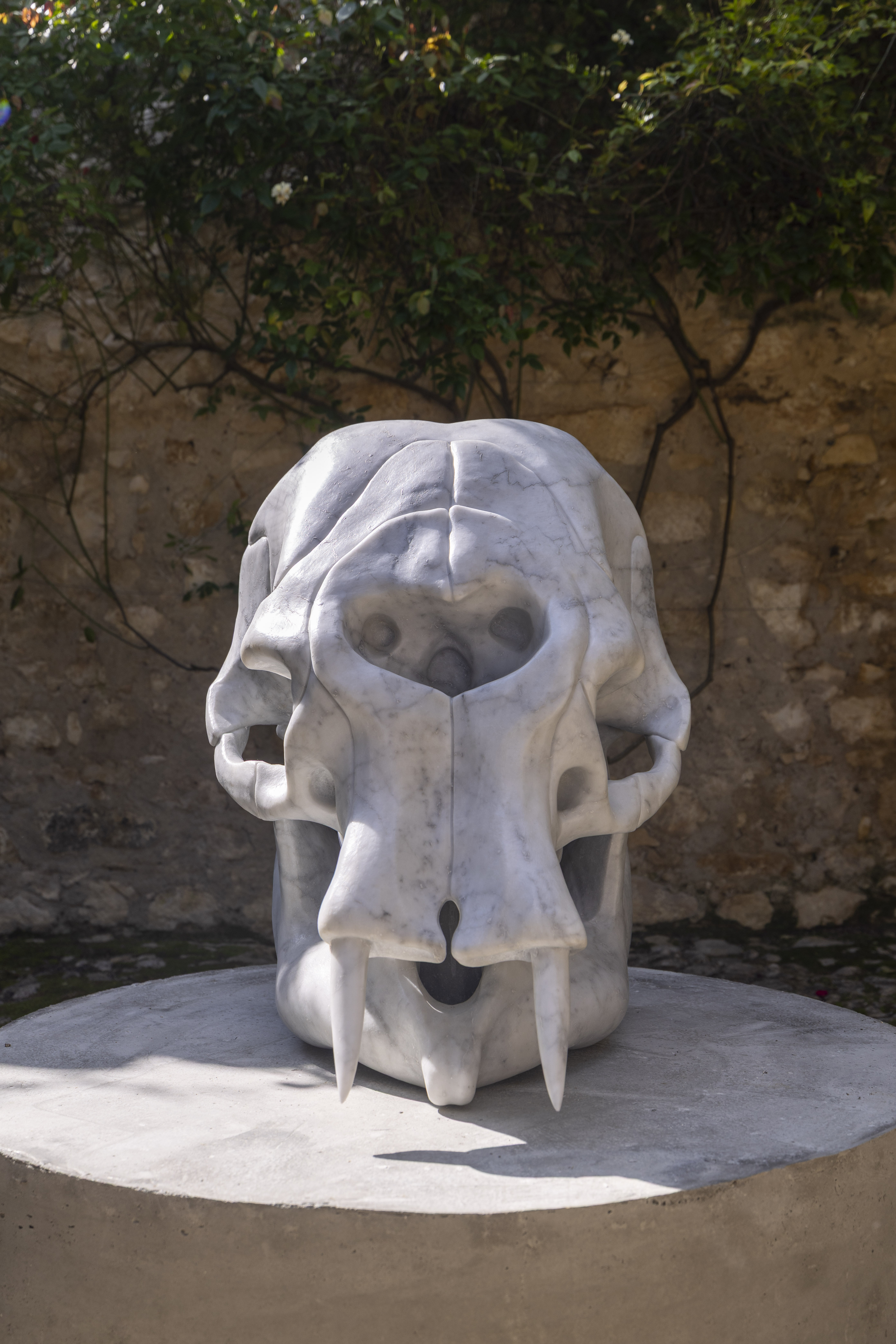
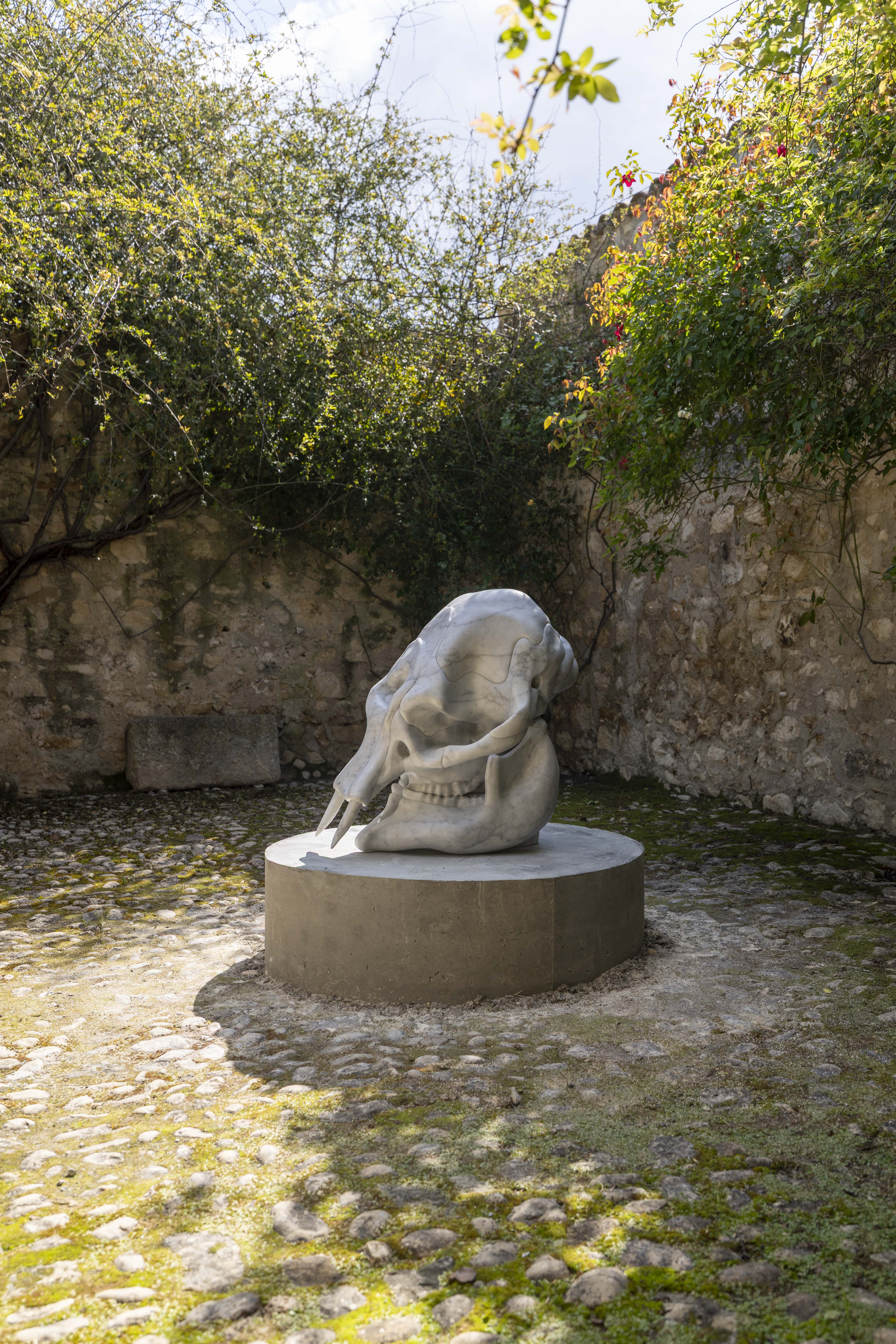
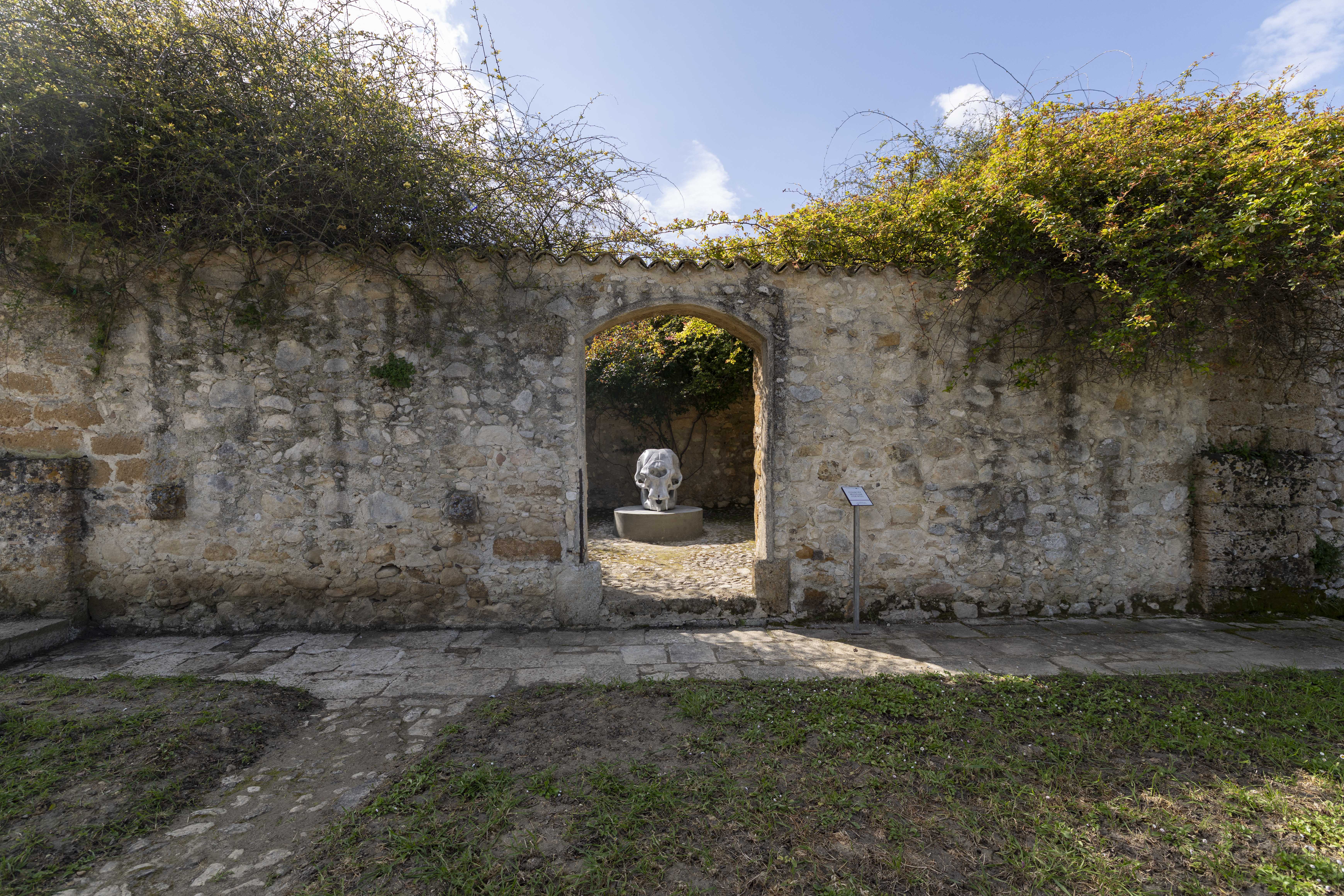
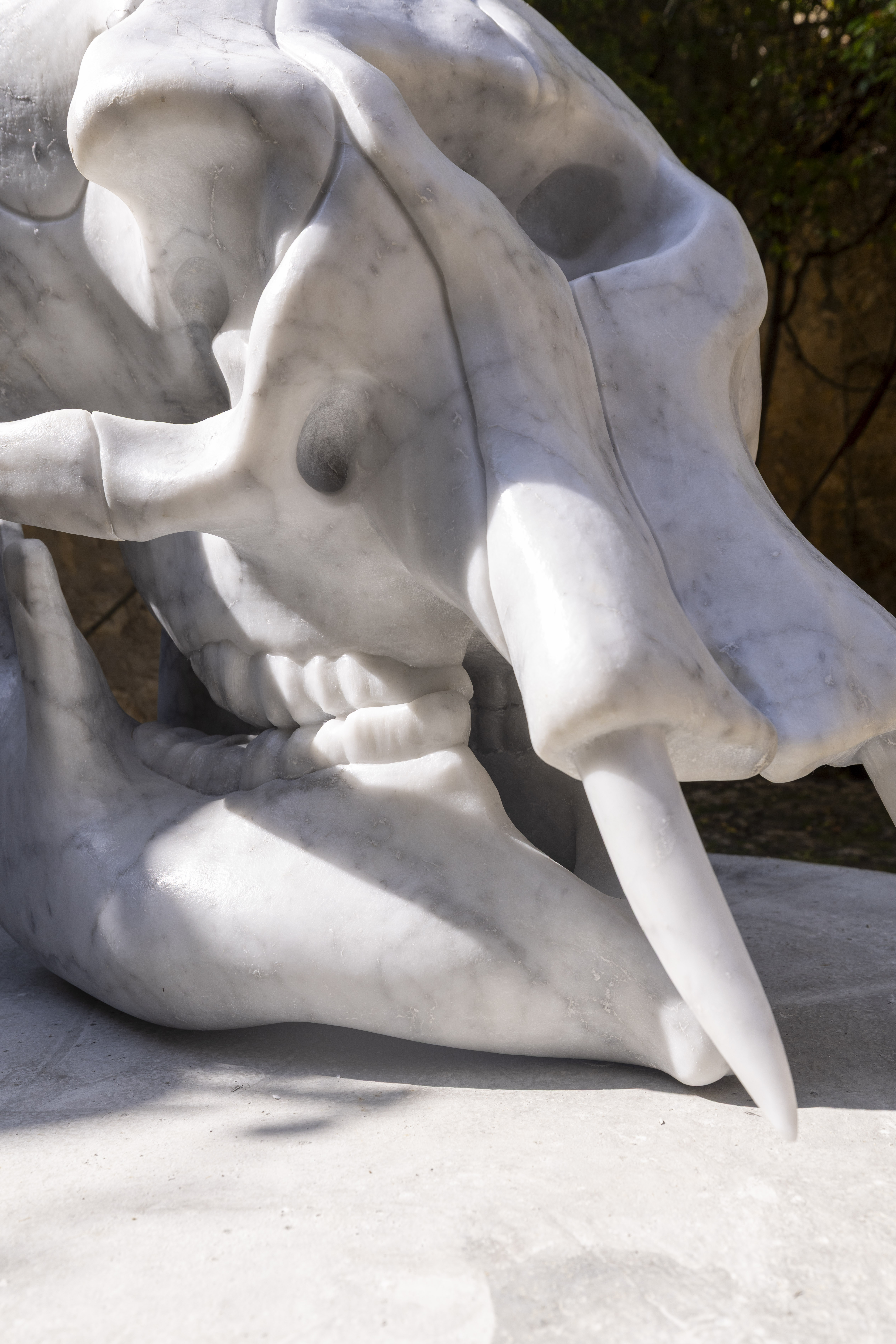
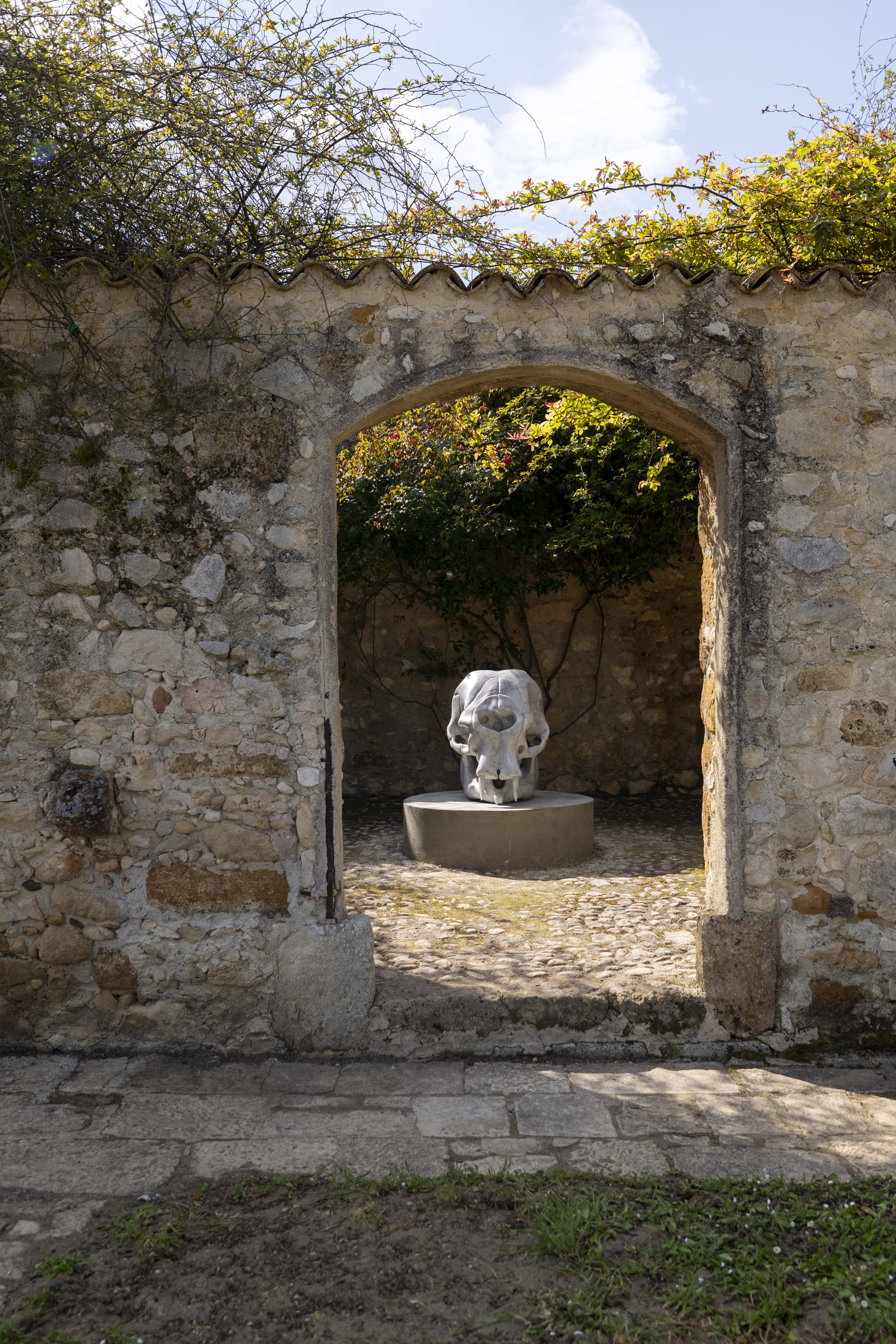
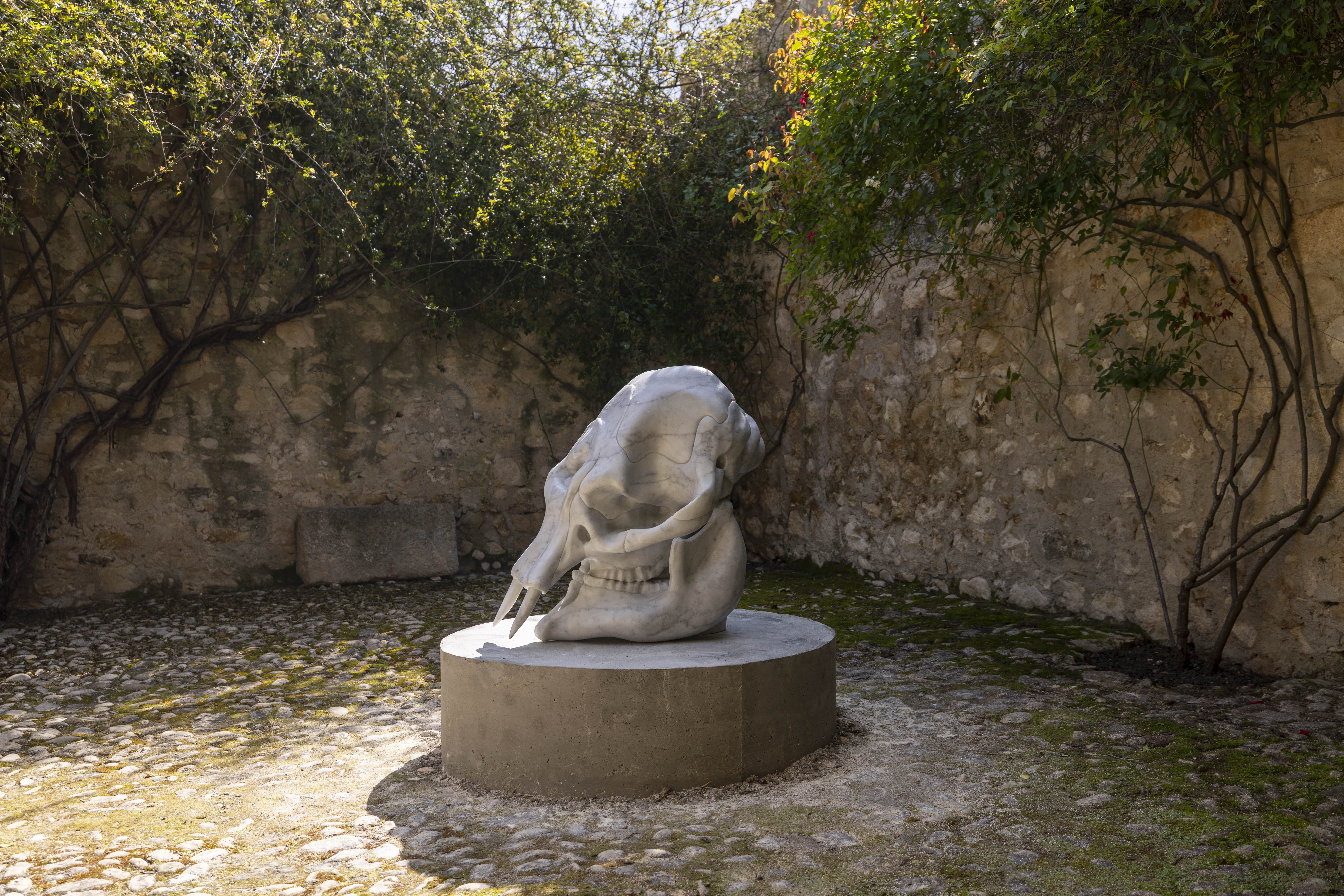
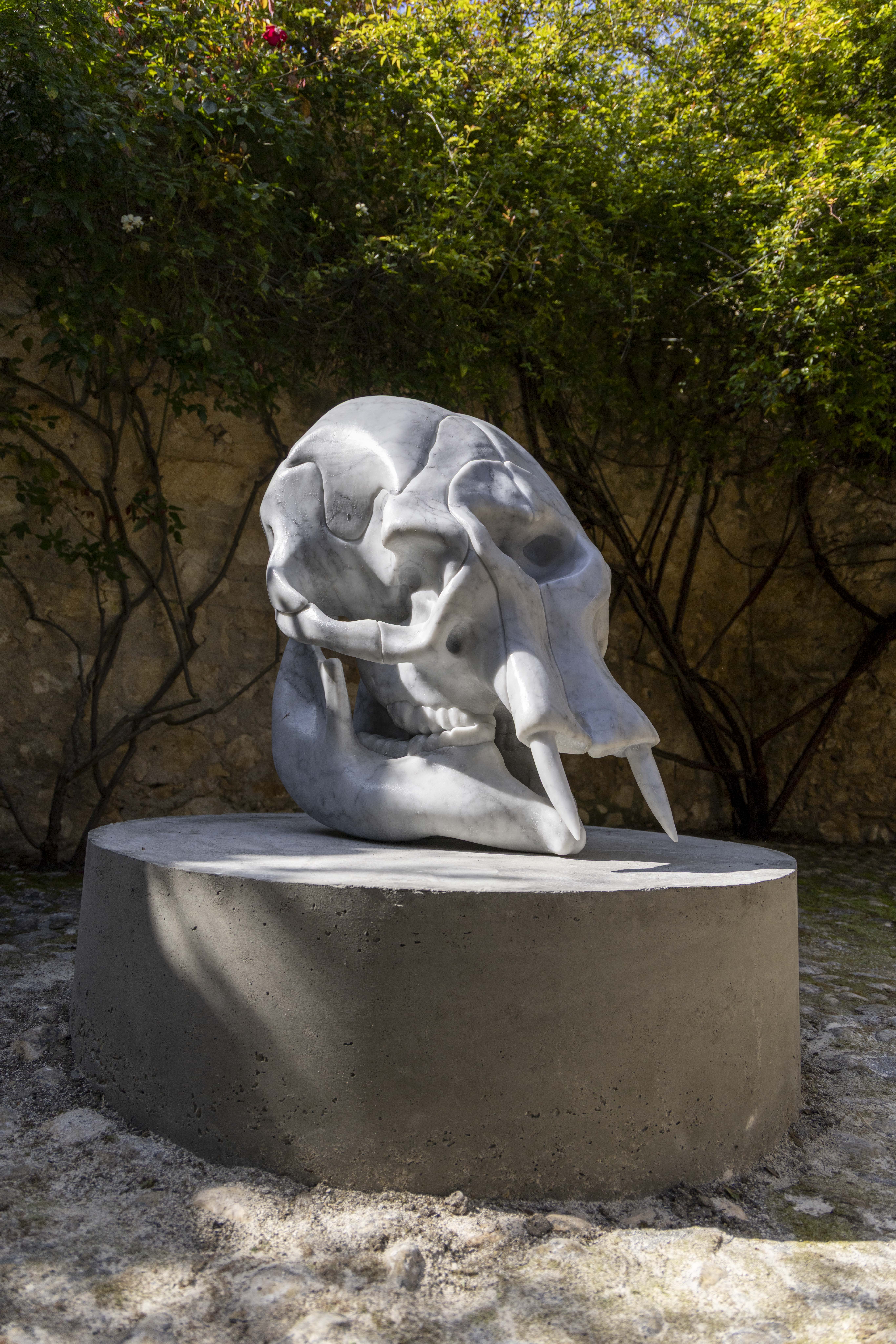
The artwork is an ode to prehistoric Sicily, in which, hundreds of thousands of years ago, dwarf elephants roamed the island. Though the animals died out long before the arrival of human inhabitants, their bones and fossils remain to this day, mostly inside caves dotted around the terrain. Due to the distinct shape of the elephant’s skull, which oddly resembles that of a human being, one theory suggests that the ancient Greek population of Sicily assumed that these bones must have been the remains of a terrible one-eyed monster: the cyclops, whose myth was to dominate Sicilian culture and imagination in many ways. Little did they know that the gaping hole in the centre of the elephant’s skull was for its trunk. Faced with a creature that resembled nothing they had seen, it was easier to imagine a monster than to recognise the features of the living creature.
Commissioned by Planeta, Ulmo, Sambuca di Sicilia


The artwork is an ode to prehistoric Sicily, in which, hundreds of thousands of years ago, dwarf elephants roamed the island. Though the animals died out long before the arrival of human inhabitants, their bones and fossils remain to this day, mostly inside caves dotted around the terrain. Due to the distinct shape of the elephant’s skull, which oddly resembles that of a human being, one theory suggests that the ancient Greek population of Sicily assumed that these bones must have been the remains of a terrible one-eyed monster: the cyclops, whose myth was to dominate Sicilian culture and imagination in many ways. Little did they know that the gaping hole in the centre of the elephant’s skull was for its trunk. Faced with a creature that resembled nothing they had seen, it was easier to imagine a monster than to recognise the features of the living creature.
Commissioned by Planeta, Ulmo, Sambuca di Sicilia